
By Omolara Adasofunjo
How best can one preserve the memories of a deceased loved one, than adding value to humanity and strengthening the survival rate of others.
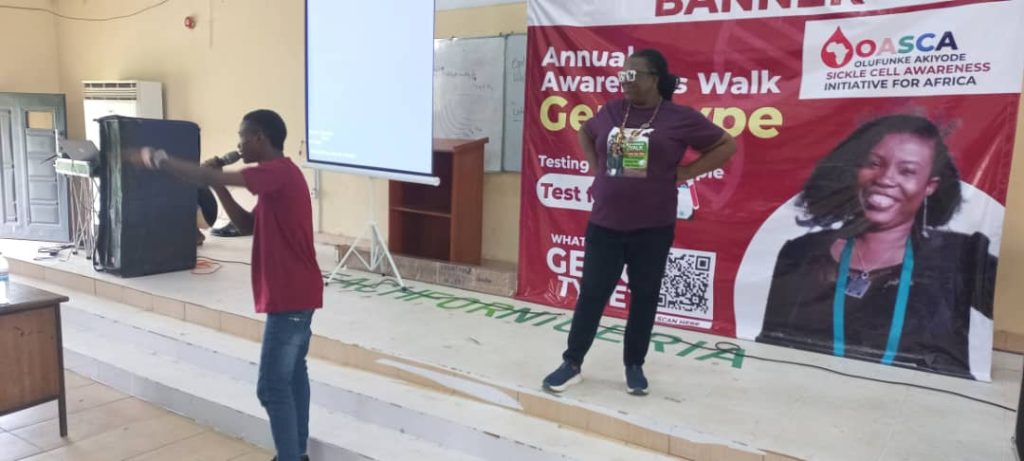
That was the motivation behind a memorial event held in Abeokuta by the Olufunke Akiode Sickle Cell Awareness Initiative for Africa (OASCA), to raise awareness about sickle cell disease, promote public education and advocate support on better healthcare services for those affected by the condition.
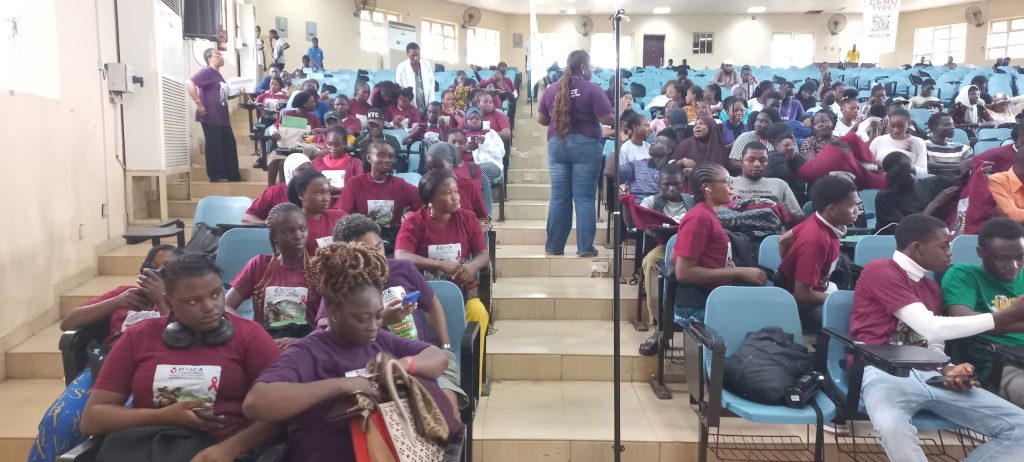
The event, held at the Federal College of Education (FCE), Osiele and the Federal University of Agriculture, Abeokuta (FUNAAB) in remembrance of Olufunke Akiode, a sickle cell carrier who had contributed immensely to efforts aimed at eradicating the disease.
Speaking at the event, former Chairman of the Nigeria Medical Association (NMA), Dr. Kunle Ashimi, emphasized that raising awareness among Nigerians, especially young people, would greatly help in improving care and support for individuals and families affected by sickle cell disease.
Dr Ashimi described sickle cell as a genetic disorder affecting millions of people worldwide urged young Nigerians to undergo genetic counseling and consider genotype compatibility before marriage, emphasizing that such awareness could prevent future cases.
He also advised parents and caregivers of children living with sickle cell to study their children’s health conditions closely and manage them properly to prevent complications.
In an emotional address, elder sister to the late Olufunke Akiode, Dr. Abiola Akiode-Afolabi explained that the awareness campaign was born out of a personal loss of three siblings to sickle cell disease.
She said the initiative was aimed at improving the lives of those affected while keeping her sister’s legacy of compassion and advocacy alive.
Dr. Akiode- Afolabi announced that the organization had made provisions for free genotype testing for 500 students in each participating institution, and would also offer scholarships and monthly allowances to outstanding students living with sickle cell disease.
Participants in the event applauded the organizers, noting that it would go a long way in drawing attention to the need for sustained public enlightenment, early testing, and stronger healthcare support systems to reduce the burden of sickle cell in Nigeria.
